Satellite speeds restored at 400 km/h as Ukraine reclaims full Starshield access
Ukrainian President Volodymyr Zelenskyy announced that military satellite connectivity has returned to full operational capacity, resolving a two-week bottleneck that hindered frontline logistics and drone defense.
By Javier Cabrera ·
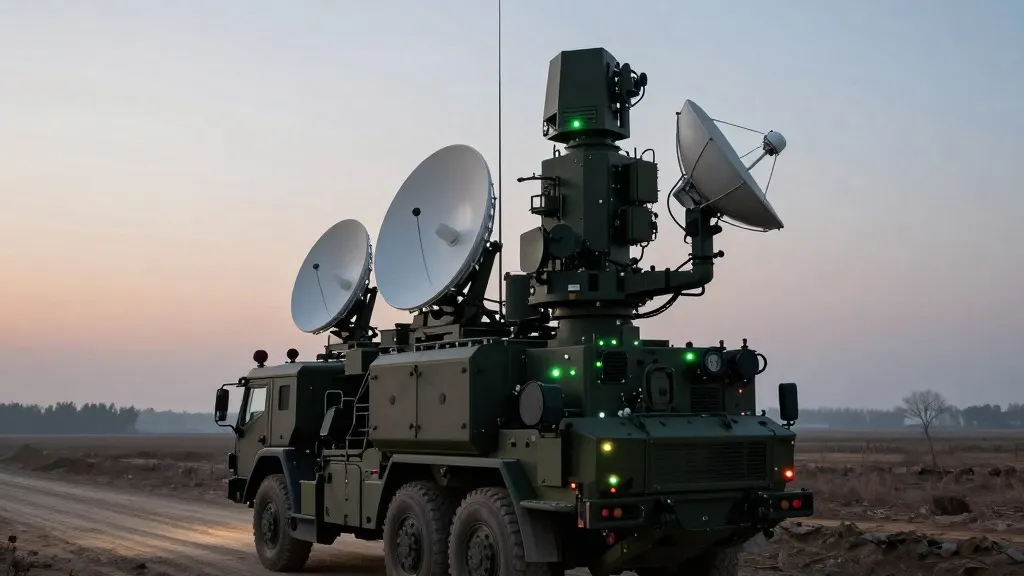
The restoration of full-speed connectivity for Ukraine’s military satellite network marks a critical shift in the operational efficiency of the country's defense infrastructure. On October 24, Ukrainian President Volodymyr Zelenskyy confirmed that the Starshield system, developed by SpaceX, is once again functioning at its previous performance levels. This development ends a period of significant restrictions that had impeded military logistics and the interception of jet-powered Shahed drones.
Starshield serves as a specialized military complement to SpaceX’s commercial Starlink network, and Ukraine has become heavily dependent on both services for its war effort. Zelenskyy described the return to normal speed as very important and significant for frontline operations. He stated that the current speed is exactly where we need it to be, signaling a return to full operational capacity for units relying on real-time data transmission.
Defense Minister Yevheniy Khmara provided technical details to RFE/RL’s Ukrainian Service, noting that Kyiv’s monitoring systems had recorded restored connectivity on equipment moving faster than 400 kilometers per hour. This capability is essential for maintaining stable links with fast-moving assets. The previous limitations had forced satellite connections to drop at approximately 161 kilometers per hour, a threshold that sharply reduced the effectiveness of drone interceptors and other high-speed military hardware.
The reported restrictions lasted nearly two weeks, creating a notable gap in communication reliability for the Ukrainian armed forces. Khmara attributed the resolution to direct dialogue and the persistent stance taken by the Ukrainian president. While the exact party that imposed the limits remains unclear, the timeline suggests a deliberate administrative or political decision rather than a technical failure.
Serhiy Beskrestnov, a defense technology adviser to Zelenskyy, suggested a potential link between the restrictions and recent diplomatic tensions between Kyiv and Washington. Although no formal connection has been established, the timing coincides with shifting policies in the Trump administration. The US government has denied that President Donald Trump or any other official requested the changes, yet the issue has become a point of contention in US-Ukraine relations.
The Wall Street Journal reported earlier in the week that President Trump called Elon Musk to urge him to lift the restrictions. Following this communication, satellite reliability improved. When asked about the incident, Trump declined to offer specific comments but stated that if there is a problem, he will get it straightened out. Lawmakers from both the Democratic and Republican parties have demanded clarification on who authorized the changes and are seeking guarantees of reliable access for Ukraine.
The initial reports of limited access emerged during a period of heightened concern over other US policy moves. Zelenskyy and Western allies have argued that certain recent actions by the Trump administration play into the hands of Russian President Vladimir Putin. In the past two weeks, Trump announced a deal encouraging Russian diesel exports and waived sanctions that were set to take effect under a law he signed last month. He also urged Kyiv to pause attacks on Russian oil refineries, citing their impact on diesel prices.
Zelenskyy initially appeared open to a pause in strikes on energy infrastructure, but after Putin ordered continued strikes on Ukraine, the Ukrainian president declared that Kyiv was done with pausing unilaterally. This shift in posture coincides with the resolution of the satellite speed issue, suggesting a broader recalibration of diplomatic and military strategies between the two nations.
Combat operations continued overnight, with Ukraine’s air defense forces reporting the destruction of 100 out of 130 Russian drones. Attacks on 15 locations resulted in at least two fatalities. Ukrainian forces also struck two industrial facilities in Russia, including a site in Oryol that produces components for cruise and ballistic missiles, and a facility in Togliatti that manufactures rubber products for solid rocket fuel.
In a related development, most of Russia-occupied Crimea experienced a near-total loss of electricity and connectivity in the early hours of the day. Russian-installed authorities reported that mobile service reached only 40 percent of the area, while public transport was suspended in Sevastopol. Sergei Aksyonov, the head of the occupation administration, blamed a drone attack on main power lines. Ukrainian monitoring channels reported a fire at the Taman electrical substation in Russia’s Krasnodar region, which supplies Crimea via the Kerch Strait. As a fifth wartime winter approaches, peace talks remain stalled with no concessions offered by the Kremlin.
Source: RFE/RL
More Business · World news · Scam Watch · Report a business · Got a Story?