Ukraine and Europe Confront Satellite Dependency as Starlink Service Grows Unreliable
Ukrainian defense officials and their European partners are now searching for ways to maintain vital communications and drone operations after experiencing sudden, politically driven disruptions to their satellite internet access.
By Javier Cabrera ·
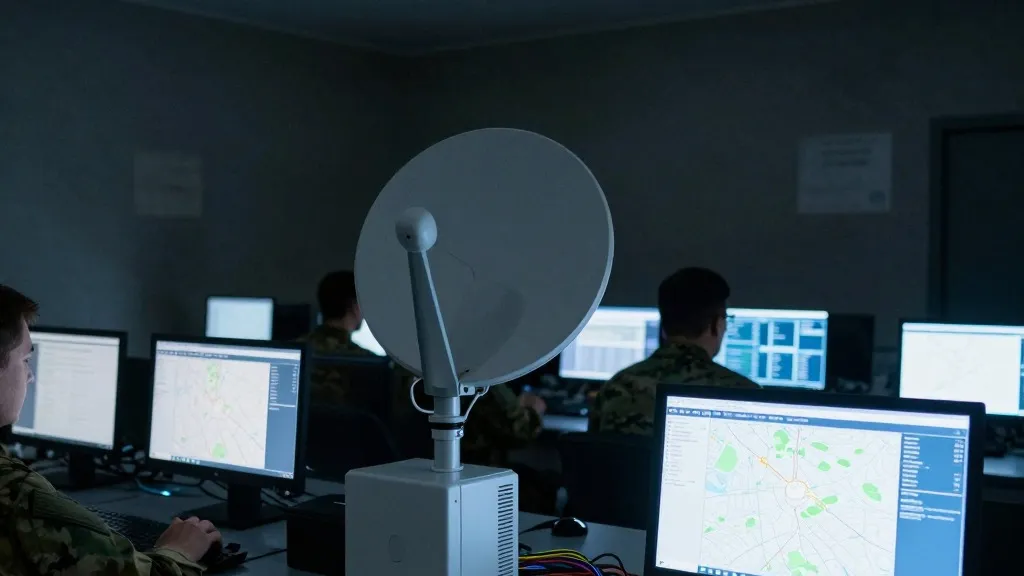
For years, the satellite internet service Starlink has been a silent pillar of Ukraine's defense, providing the high-speed data links that power everything from civilian internet access to military operations. But that reliance is now a source of deep anxiety, as service has become increasingly unreliable due to the political inclinations of its owner, Elon Musk. This has thrown Ukraine and Europe into a pressing debate about how to proceed with a critical tool they no longer fully control.
At the heart of the matter is Starlink's role as the world's largest communications satellite network. It delivers fast, reliable data streams to any user equipped with a relatively compact terminal. For Ukraine, this capability has been indispensable for maintaining communications and for the remote operation of drones used both for air defense against Russian attacks and for striking Russian targets. The ability to guide these systems from a distance is a direct result of the connectivity provided by Starlink.
The value of this technology is difficult to overstate. In practical terms, Starlink provides a combination of coverage, cost, and ease of use that is unmatched by competitors. The head of hardware R&D at a Ukrainian defense firm, who spoke anonymously for security reasons, highlighted the main operational limitation, which is simply the need to physically position an antenna to receive signals from the satellites. This requirement underscores the system's practical, ground-level vulnerability.
The network was built on a foundation of international cooperation. The United States and European nations like Poland and Germany have collectively paid for tens of thousands of commercial Starlink terminals to be sent to Ukraine, and they also cover the monthly subscription fees. This arrangement created a system where access was guaranteed by allied governments, not just by the commercial provider.
However, the foundation has cracked. Recent, unexpected disruptions to service in Ukraine have raised urgent questions about the future. The issue is not a technical failure but a political one, rooted in decisions made by Musk that have introduced uncertainty into a system Ukraine depends on for its survival. The tension between providing a critical service and the owner's political influence has come to a head.
This uncertainty is forcing a hard look at alternatives. The question of how to move forward without a reliable Starlink connection is now a central problem for Ukrainian military planners and their European allies. They must weigh the system's clear benefits against the risk that access could be altered or denied at any moment, a prospect that threatens both civilian communications and critical military operations.
In response to these concerns, Ukraine has access to a military-grade version of the satellite service called Starshield, which is provided by the US government. This specialized system is available to the Ukrainian military, and defense companies are able to test it in their technologies in cooperation with the military. While Starshield represents a more secure, government-controlled option for sensitive operations, it does not replace the commercial Starlink network that supports a wide range of other activities across Ukraine.
Source: Ars Technica · original report published