Record spending defines 2026 midterms as party money strategies diverge
Republican committees have outspent Democrats on television, concentrating over $850 million in states Trump won by wide margins, while Democratic candidates maintain a fundraising edge.
By Javier Cabrera ·
The 2026 midterm elections are shaping up to be the most expensive in American history, according to analysis from the Associated Press. As voters head to the polls on this Election Day, the financial scale of the campaign has become a defining feature of the contest for control of Congress. The sheer volume of money being deployed reflects the high stakes of the race, with both parties pouring resources into their respective candidates and committees. This level of spending is unprecedented and highlights the intensifying nature of the political battle halfway through President Donald Trump's second term.
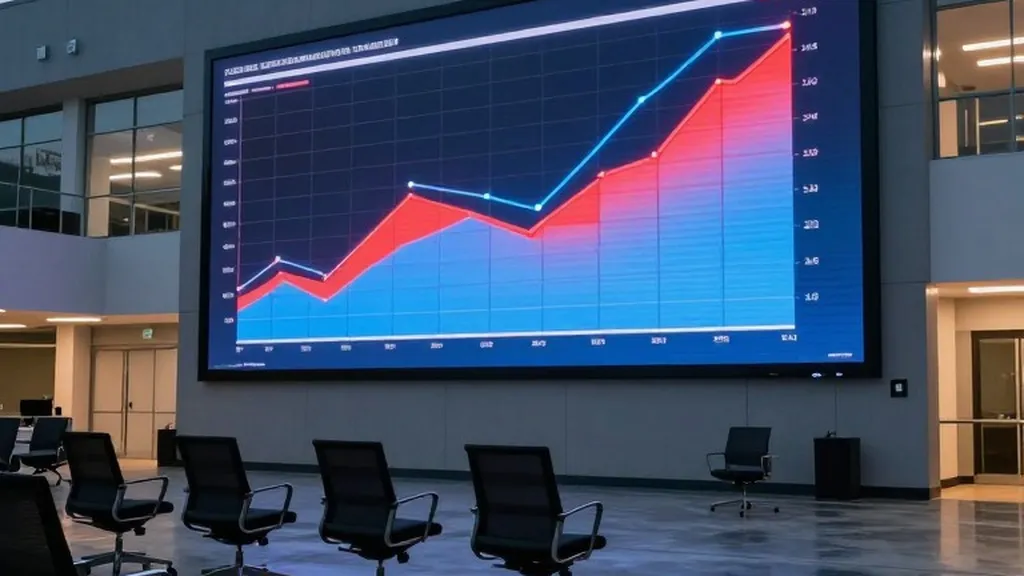
Data from AdImpact, reviewed by the AP, reveals a distinct divergence in how the two major parties have deployed their funds. Republican committees have outraised and outspent their Democratic counterparts in the general election cycle. This advantage has been bolstered by significant contributions from Trump-affiliated groups and Elon Musk. The concentration of this spending is stark, with 88.1 percent of all Republican general election television ad spending directed toward states and districts that Donald Trump won in the 2024 presidential election.
Within that broader spending pattern, a specific subset of the Republican advertising budget stands out for its intensity. More than $850 million of those television advertisements were run in areas where the president won by ten points or more. This strategy suggests a focus on reinforcing support in strongholds rather than solely competing in marginal districts. The placement of these ads indicates a belief that heavy spending in these safe Republican areas is essential to securing the necessary turnout to hold or gain seats in the House and Senate.
In contrast, the Democratic fundraising picture presents a different dynamic at the candidate level. While their committees lagged in total spending, individual Democratic candidates actually outraised their Republican opponents. This candidate-level edge suggests that Democrats have been more effective at raising funds directly for specific races, potentially allowing them to compete more aggressively in close districts. The disparity between committee spending and candidate fundraising highlights the complex financial ecosystem of modern American elections.
The allocation of funds is not occurring in a vacuum but is deeply intertwined with the geographic realities of the election. Six states, including California, Florida, Missouri, North Carolina, Tennessee, and Texas, are using new congressional maps following mid-decade redistricting. Ohio is also utilizing a new map. These changes in district boundaries have influenced where money is spent and which races are considered competitive. The new maps have created uncertainty, as some districts drawn to favor one party may not vote as expected, complicating the calculation of where advertising dollars will yield the best return.
Voters are casting their ballots with the cost of living and the administration's handling of the economy at the forefront of their minds. The Associated Press reports that voters are struggling with high prices and are angry over an unpopular war with Iran. This sentiment has fueled the fundraising efforts on both sides, as campaigns seek to translate economic frustration into votes. The financial resources available to each side are being used to amplify these messages, with television ads serving as the primary vehicle for reaching the public.
The race for the House, where all 435 seats are up for grabs, is particularly sensitive to turnout and spending. Democrats need a net gain of three districts to secure a majority, while Republicans can afford to lose no more than two. The 46 battleground districts identified by Ballotpedia are likely to see intense spending as both parties fight for control of this chamber. The outcome will determine who sets the legislative agenda for the president's final two years and who holds the power of oversight and investigation.
In the Senate, where 35 seats are on the ballot, the financial stakes are equally high. Democrats need a net gain of four seats to take control, a hurdle that requires winning several difficult races in states that voted for Trump in 2024. The concentration of Republican spending in states with large presidential margins may be an attempt to protect these vulnerable seats or to push the margin of victory in competitive ones. The special elections for the remaining terms in Florida and Ohio add another layer of complexity to the Senate race.
The role of Elon Musk in the Republican fundraising advantage cannot be overstated. His contributions have helped close the gap between the two parties' committee-level spending, providing a significant boost to the GOP's advertising efforts. This influx of wealth has allowed Republican committees to dominate the airwaves in key states, potentially influencing voter perception in the final days before the election. The involvement of such a high-profile figure in the fundraising process has been a point of discussion for analysts and voters alike.
As the polls close across the country, the impact of this record-breaking spending will be measured in the votes cast. The divergence between the Republican committee advantage and the Democratic candidate-level fundraising edge creates a unique financial landscape for this election. The results will reveal whether the massive expenditure of over $850 million in Trump's strongholds translates into the desired seat retention or if the Democratic strategy of focusing on candidate-specific fundraising proves more effective in the battleground districts that will decide the next two years in Washington.
The Associated Press notes that the election is being viewed as a referendum on the president's second term, with economic concerns playing a central role in voter decision-making. The money spent on this election is a direct reflection of the intensity with which both parties are contesting that referendum. The final tally of seats will be the ultimate test of whether the strategic deployment of these historic sums of money aligned with the preferences of the American electorate on this pivotal Tuesday.