Voyager Technologies: Griffin-1 Lander Survives JPL Environmental Gauntlet
The spacecraft cleared vibration and thermal trials, clearing the path for a late 2026 launch carrying 455 kilograms of cargo to the lunar south pole.
By Amelia Clarke ·
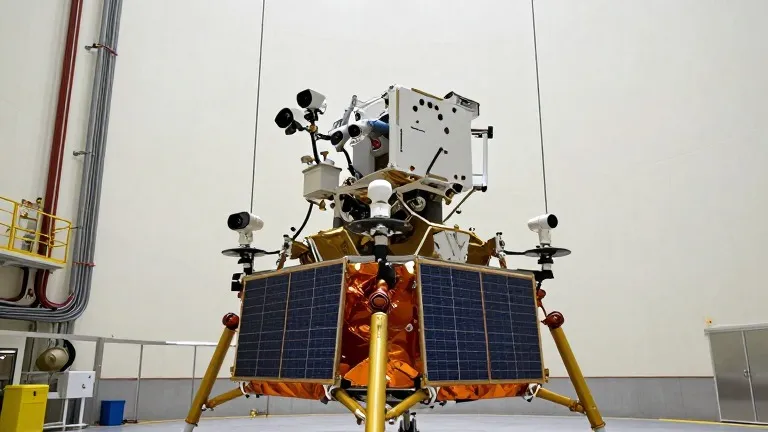
Voyager Technologies has confirmed that its Griffin-1 lunar lander has completed the final phase of environmental testing at NASA's Jet Propulsion Laboratory in Southern California. The successful conclusion of these trials removes a major technical hurdle for the commercial mission, which is scheduled to launch later this year.
The testing protocol was designed to replicate the physical stresses the vehicle will endure from launch through landing. Engineers subjected the lander to extreme temperature fluctuations, high-intensity vibration, and the loud acoustic environment of a rocket ascent. An image captured on Aug. 31 shows the spacecraft inside JPL's 25-foot-wide space simulator during the process.
Charles Whetsel, who manages the Exploration Systems Development Office at JPL, noted that the laboratory's Environmental Test Laboratory has supported robotic exploration since the Ranger program of the mid-1960s. Whetsel stated, "We're proud to provide our expertise and facilities to support this new phase of commercial lunar exploration." His comments acknowledge the continuity of JPL's role in lunar operations, shifting from government-led missions to commercial partners.
Griffin-1 will operate under NASA's Commercial Lunar Payload Services initiative. The vehicle is configured to deliver more than 1,100 pounds, or 455 kilograms, of cargo to a site near the lunar south pole. This payload includes scientific instruments and new technologies intended for surface testing.
A key component of the cargo is the FLIP rover from Astrolab. This robotic vehicle is equipped with a supercomputer, marking a notable increase in computational power for lunar surface operations. The data generated by these experiments is intended to support infrastructure development for a future crewed base, a goal NASA targets for the next five years.
Source: Space.com