UK Households Add Tinned Goods and Batteries to Weekly Shopping Routines
A new government campaign urges residents to keep three days of supplies, prompting families in Hampshire and London to adjust their grocery habits and track expiration dates.
By Javier Cabrera ·
The UK government launched a campaign on Thursday instructing households to store three days' worth of food, water, and essential supplies. The directive asks residents to prepare for potential emergencies ranging from supply chain breaks to state-sponsored threats. Officials cited Russian activities and climate change impacts as primary drivers for the new advice, which follows months of similar warnings from ministers.
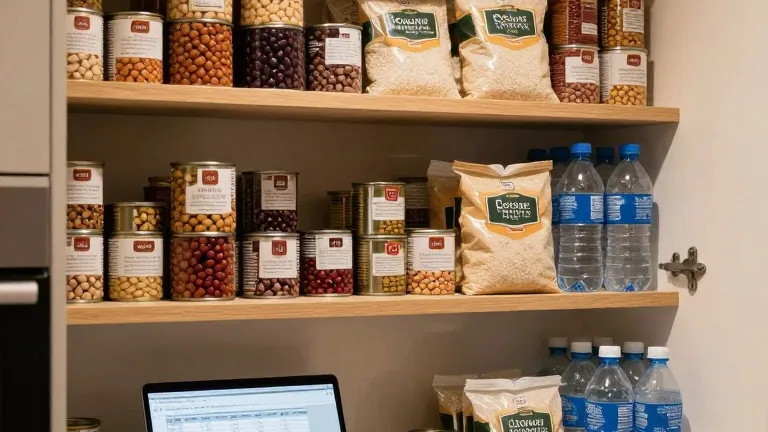
Lawrence Barratt in Hythe, Hampshire, began increasing his pantry stock about two weeks ago. He now buys beans, soups, noodles, and rice with each weekly shop. His goal is to maintain enough food and bottled water to feed two people for 72 hours. He has also secured a first aid kit, a battery-powered radio, and a portable power bank that he believes can charge phones and run small appliances.
Barratt said he acted after seeing the government's Be Ready campaign online. He noted that the advice made him realize he would be unprepared for a crisis. His decision was also influenced by memories of the 2020 lockdown, when shelves for pasta and tinned goods emptied quickly.
In Greenwich, London, Marco Camurri has been collecting staples for several months. His family stocks pasta, passata, tinned food, and medicine. Camurri said he keeps power banks charged and ensures their car fuel tank remains above 50 percent, providing about 300 miles of driving range. They store wood in their garden to boil water if needed and maintain a spreadsheet to track expiration dates for their supplies.
Camurri attributed his early preparation to reports of El Niño disrupting supply chains. He described the process as adding one extra week of staple shopping to their routine. His family can leave the UK if necessary, as they have relatives in continental Europe.
Jack Davenport in North Shields also cited El Niño as a reason to stockpile. He said it is difficult to judge the scale of threats facing the country, including climate disasters and energy insecurity. Davenport described the nation's infrastructure as outdated and suggested the government aims to reduce long-term panic by presenting risks as possible rather than certain.
Deirdre O'Sullivan in Leicester challenged the guidance, calling it daft. She compared it to 1970s advice to hide under a table during nuclear attacks. O'Sullivan argued that the advice is inadequate for a genuine emergency and that a severe food shortage would become apparent over a longer period. She likened the policy to a bureaucratic measure designed to show that a policy exists, even if it is useless.
Source: The Guardian