Turnout in Kfar Qasim May Decide Israel's Next Government
With both major Israeli political blocs falling short of a majority, the 12 to 15 seats won by Palestinian citizens will determine who holds power.
By Owen Turner ·

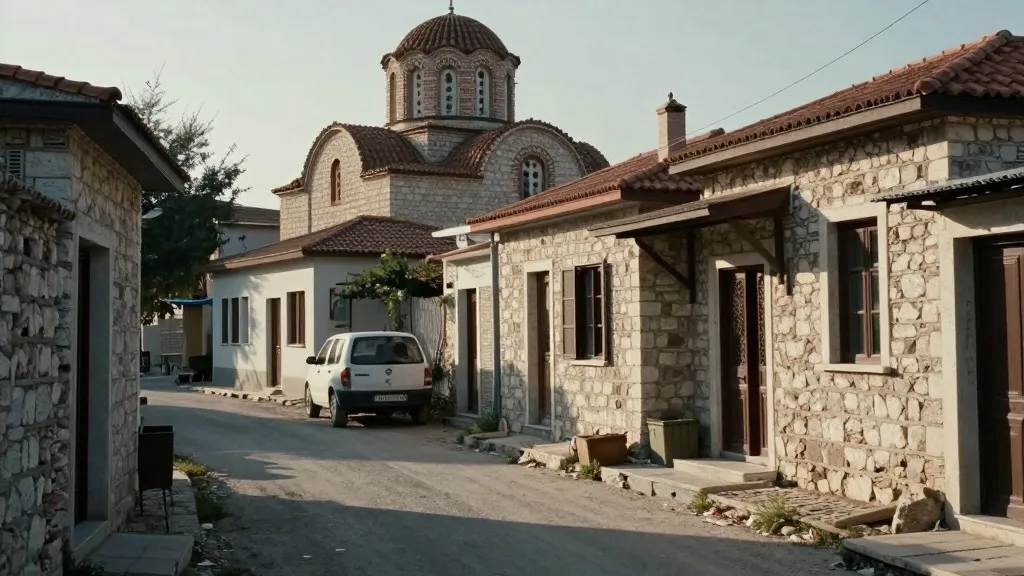
Sunset settles over Kfar Qasim, where residents gather for knafeh and cardamom coffee to hear campaign promises. For the roughly 20% of Israel's population that identifies as Palestinian, the next few days carry a weight that few other groups in the country feel. Their collective choice will likely decide whether Benjamin Netanyahu remains in office.
Polls indicate that Netanyahu's far-right coalition will lose its majority in the 120-seat Knesset. However, the Jewish Israeli opposition bloc is also projected to fall short of the 61 seats required to form a government. In this vacuum, Palestinian voters are expected to secure between 12 and 15 seats. These seats are split between the Islamist Ra'am party and the Joint List, an alliance that includes Ta'al.
Ahmad Tibi, who leads Ta'al and has served in the Knesset for over twenty years, stated that high turnout is a critical tool to remove the current government. He said the community is determined to do everything possible to bring the administration down.
The path to a coalition with Arab politicians is politically fraught. Most of the Jewish opposition has ruled out such an alliance, and Netanyahu's allies have worked to make it toxic. Campaign posters feature slogans like "It's the right or Palestine" or "Bibi or Tibi." Despite this, historical precedent suggests these promises may break. In 2021, Ra'am leader Mansour Abbas entered a historic coalition with Naftali Bennett, who now sits in the opposition.
Amjed Iraqi of the International Crisis Group noted that a returning far-right coalition would have a renewed mandate to speed up policies of ethnic cleansing and annexation. He described the current vote as largely about mitigation, arguing that Palestinians can see the difference between a right-wing and a far-right government.
Fear drives much of the motivation for voting. Sami Abu Shehadeh, leader of the Balad party, cited the destruction in Gaza, militant violence, and rising racism inside Israel as reasons to vote. He said voters understand the danger if the current ministers return to power.
Distrust of the system remains a barrier to turnout. Last month, Israel's supreme court forced Abu Shehadeh out of the race over an article regarding the October 7 attacks. This ruling was widely criticized for applying different free speech standards to Jewish and Palestinian citizens. Conversely, a motion to disqualify national security minister Itamar Ben-Gvir over racist language was not upheld.
The election takes place two days before Kfar Qasim marks the 1956 massacre, in which border police killed 49 people who had broken a curfew they did not know about. Iraqi observed that many people feel powerless because there is no clarity about what comes after the vote.
Despite the uncertainty, many residents are urging their friends to go to the polls. One local voter, who manages mixed Jewish and Arab staff at a tech company, argued that the math is simple. He noted that the opposition will likely change its position once the results are in.
Source: The Guardian