New York Bill Sending Potassium Bromate Ban to Governor's Desk
Legislation passed by both legislative chambers would prohibit three food additives linked to cancer and tighten disclosure rules for substances generally recognized as safe.
By Javier Cabrera ·
New York lawmakers have sent a food chemical bill to the governor's desk.
Senate Bill S1239E prohibits potassium bromate, Red No. 3 and propylparaben, three food chemicals researchers have linked to cancer. The measure also sets stricter reporting requirements for substances the food industry certifies as generally recognized as safe without FDA review. Food manufacturers can no longer cite FDA recognition of a substance as a defense under the bill. State Sen. Brian Kavanaugh, representing District 27, sponsors the legislation, which has cleared both chambers and awaits Gov. Kathy Hochul's signature. More than a dozen state senators have signed on as co-sponsors.
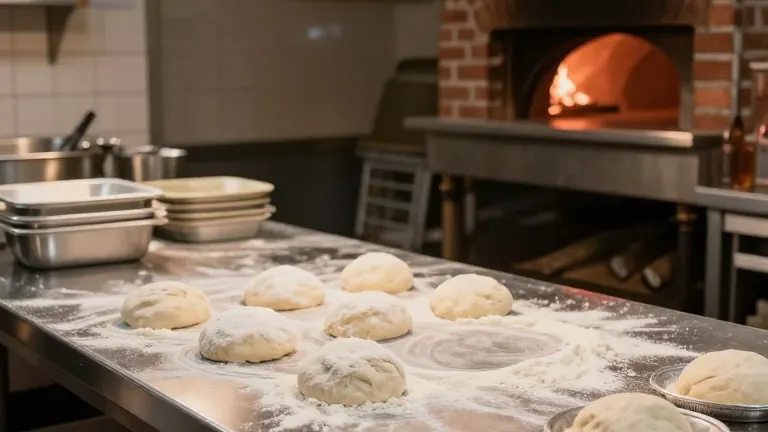
Potassium bromate accelerates dough rise and tightens crumb structure in commercial baking. Flour mills add it to varieties used widely in New York pizzerias, including All Trumps and other General Mills products. A 1990 Japanese study found the compound caused cancer in rats. The International Agency for Research on Cancer classified it in 1999 as possibly carcinogenic to humans. The European Union banned it in 1990, Canada in 1994, China in 2005 and India in 2016. The United States has no federal prohibition.
Chris Cutillo, who owns Austin Street Pizza in Forest Hills, said he has never used bromated flour at his shop. He imports flour from Italy instead. Baking without bromate requires closer attention to proofing times, he said. "You really have to be on top of it," Cutillo said. "I think it's a bit more of a uniform rise in the dough with the other flour, so even if you overproof or underproof, it always comes out the same."
State Sen. Kristen Gonzalez, a co-sponsor, said the bill addresses gaps in federal oversight. "It's important the context of conversations we've had this summer about the FDA's guidance being inadequate and, as a result, seen so many cases of E. coli and listeria across the country," Gonzalez said. "We want to to make sure any loopholes are being closed." She added: "What we're really trying to get is transparency around food. This way, parents aren't left guessing what's safe when feeding their children, or when you and I are making decisions at the supermarket."
Jensen Jose, senior regulatory counsel at the Center for Science in the Public Interest, said shops often do not know the flour they buy contains bromate. "We've talked to a lot of pizzerias and bakeries, and they say they didn't know about it," Jose said. "We just assume that the food we get is safe." He noted the FDA's 2026 budget summary shows an 11.4% decline in funding for the fiscal year. The agency finalized a Food Chemical Safety Post-Market Assessment Program earlier in 2026 to replace its prior approach to evaluating chemicals already in the food supply.
Taewon Kim, assistant director for Korean Community Services, said the group translates food safety materials into other languages for immigrant communities in Queens. "This ban would help them not worry about these ingredients," Kim said. "Health should not be limited to those with English proficiency. Consumer education, transparency around food information and the right outreach should work together to support health in your community."
Source: QNS