Extra hour of sleep arrives with clock change, prompting Red Cross alarm checks
As daylight saving time ends Sunday, November 1, the American Red Cross advises residents to use the time shift to verify that smoke and carbon monoxide detectors are functioning correctly.
By Amelia Clarke ·
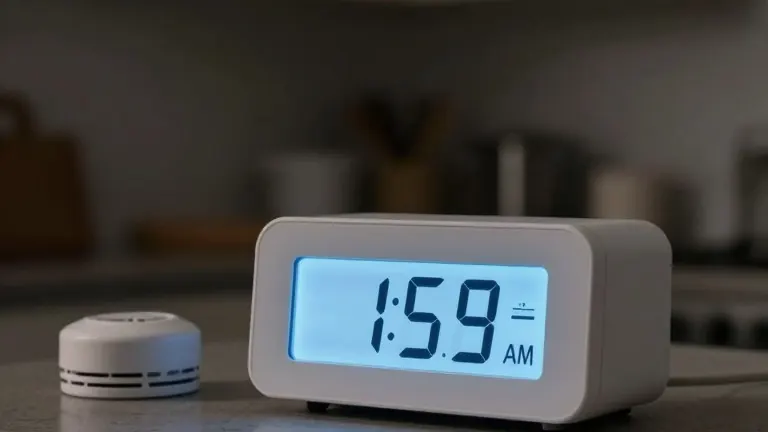
Households across the country will gain one hour of sleep this weekend when daylight saving time ends. At 2 a.m. on Sunday, November 1, clocks will turn back one hour to standard time. This adjustment results in earlier sunrises and sunsets until daylight saving time returns on March 14, 2027.
The American Red Cross on Long Island is using this annual shift to remind residents to test their safety equipment. Jose Dominguez, the Chapter CEO for the American Red Cross on Long Island, said the time change offers a practical moment to ensure devices are working. "Every second counts when there's a home fire. The sooner an alarm alerts you to a fire, the sooner you can get to a safer place," he said.
The organization advises testing every smoke alarm by pressing the Test/Hush button to confirm the siren sounds properly. Residents should also replace standard batteries in smoke detectors and carbon monoxide units, even if the devices are hardwired with backup batteries. For carbon monoxide detectors, the Red Cross notes that units typically need replacement every five to seven years, while smoke detectors last about ten years.
Beyond battery replacement, the Red Cross lists specific maintenance steps for keeping detectors effective. Homeowners should check expiration dates printed on the back of each device. They should also clean sensor vents once a year using a vacuum or compressed air duster to remove dust and debris. Placement is another factor, with detectors required on every level of the home and near sleeping areas.
The group also provides fire safety guidelines for daily habits. Residents are advised to install smoke alarms on every level of their homes, including inside bedrooms and outside sleeping areas. They should create a fire escape plan that identifies two ways out of every room and a meeting spot outside. Practicing this escape at least twice a year is recommended. Additionally, children should be taught what smoke alarms sound like and how to call 9-1-1.
To prevent fires, the Red Cross warns against leaving heating appliances plugged in or fires burning while asleep or away from home. In the kitchen, residents should not leave cooking unattended, as most kitchen fires start on stovetops. If a grease fire occurs, the organization advises using a lid to suffocate the flames rather than tossing water on the pan. Items that catch fire, such as curtains or potholders, should be kept away from the stove.
The American Red Cross has released a free Emergency app for smartphones. The app provides weather alerts, emergency preparedness information, and locations for open shelters. It is available in English and Spanish and is compatible with Apple Watch and Android wearable devices.
Source: TBR News Media