Minnesota mine decision hinges on November vote
A 90-day clock is ticking on a mining ban near the Boundary Waters as state and federal officials prepare to decide the fate of a massive mineral deposit.
By Amelia Clarke ·
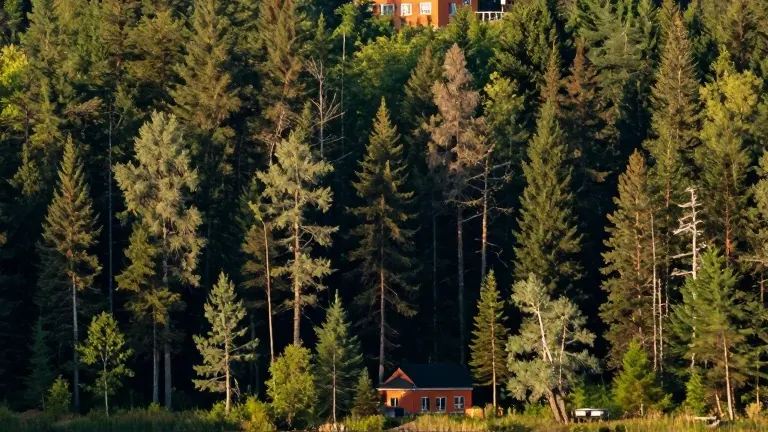
A 90-day clock is currently running on a mining ban near the Boundary Waters Canoe Area Wilderness in Minnesota. The ban will expire 90 days after Governor Tim Walz leaves office, a deadline that forces a decision on the project before the new administration takes over in January.
The dispute centers on the Duluth Complex, a geological formation that Twin Metals Minnesota describes as the largest undeveloped deposit of critical minerals in the world. The company claims the site holds about 95% of the nation's nickel, 88% of its cobalt, and more than one-third of its copper. These materials are essential for electric vehicles, smartphones, and the global shift toward clean energy.
In August, Governor Walz issued an executive order to ban mining in the area. He did so after Republicans in Congress and President Donald Trump overturned a 20-year moratorium on mining upstream from the wilderness. The federal action prioritized domestic development of critical minerals for sectors including artificial intelligence and energy. Now, the state's political future will determine if the ban survives.
Minnesota House Speaker Lisa Demuth, the Republican gubernatorial candidate, supports the mine. Senator Amy Klobuchar, the Democratic candidate, voted against the federal resolution but has not stated whether she would issue a similar executive order if elected. The state legislature could also consider a permanent ban in the new year, though partisan lines on the issue are not uniform.
Twin Metals, a subsidiary of Antofagasta PLC, says the mine will create 750 full-time jobs and 1,500 additional spinoff jobs. Dean DeBeltz, the company's vice president for external relations, notes that the U.S. currently imports 45% of its copper and 41% of its nickel. He points to a 2020 Harvard study that found a short-term economic bump but a long-term negative effect, a point critics use to question the project's sustainability.
Proponents argue the mine is a matter of national security. Julie Lucas, executive director of MiningMinnesota, said the U.S. can no longer rely on foreign supply chains for these basic building blocks. Opponents, including Trina Swanson, a Democrat running for Congress, say the Boundary Waters is too unique to risk. She noted that the mine projects only 25 years of operation, after which the minerals would likely be sent to China for processing.
The debate has become a central issue in the November elections for both state and federal races. Local officials in Ely, a town of just over 3,200 people, are weighing the community's mining heritage against its current tourism economy. The outcome of the vote will determine whether the Duluth Complex remains untouched or becomes an active mining site.
Source: The Christian Science Monitor