Spain's Daily Set Lunch Costs 14.70 Euros as 4 Million Weekly Dinings Fade
A new book documents the economic and cultural decline of the menú del día, a midday staple that has lost ground for three decades.
By Owen Turner ·
The average price of a menú del día in Spain has climbed to 14.70 euros. This midday set meal, which includes a starter, main, dessert, and drink, is served to approximately 4 million customers on each working day. The tradition, once a cornerstone of Spanish dining, is facing shrinking demand and rising costs.
The origins of the menu stretch back to the mid-1960s under the regime of Francisco Franco. Manuel Fraga, the information and tourism minister, designed the offering to demonstrate to foreign visitors that food was plentiful and affordable. The initial law mandated a soup starter, a main dish chosen from at least three options, and a fruit or cheese dessert. Prices were fixed between 50 and 250 pesetas, and the accompanying wine had to be pure and at least 12% alcohol.
In the early 1970s, authorities renamed the offer to distance it from its tourist-focused origins. The goal was to encourage domestic consumption. Today, many Spaniards are unaware of its governmental roots. Lakshmi Aguirre, a food journalist who recently published a book on the topic, noted that people were shocked to learn of the connection to Fraga. She stated that the public tends to forget this aspect of their history quickly.
Chef Ferran Adrià declared the menú dead in 2009. He blamed economic downturns and the rise of bistro-style restaurants charging 20 to 30 euros for similar meals. Seventeen years later, the practice persists but is eroding. Aguirre argues the tradition is in trouble but not yet finished. She attributes the decline to time poverty, with many workers opting for quick lunches or food brought from home.
Small, family-run restaurants face increasing pressure from energy and food costs. These expenses make it difficult to maintain a rotating daily menu. Some establishments have shifted to a single dish of the day. Others have adapted their offerings to reflect changing demographics, adding Latin American staples. Aguirre views these changes as a mirror of the society that consumes them.
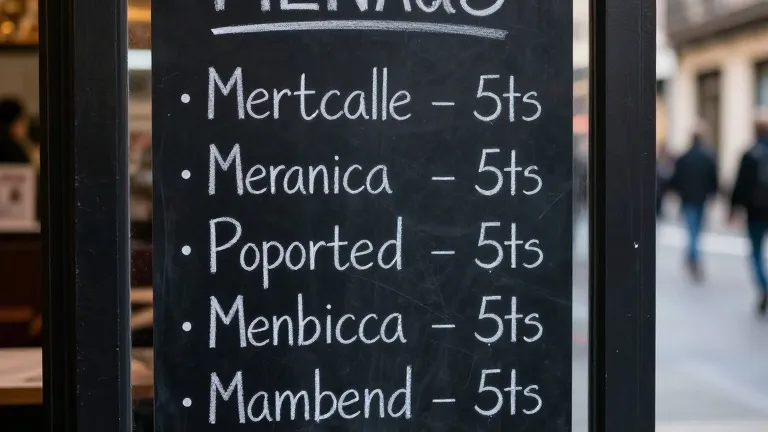
Aguirre identifies specific markers of a high-quality venue. She looks for simple dishes, a regularly changing menu, and non-frozen chips. She also values a room full of regulars and a chalkboard that avoids trendy terms like avocado or truffle. A bonus factor, she noted, is seeing the owner's child doing homework at a table in the back.
The economic impact extends beyond the price of a meal. Aguirre describes the menú as a social meeting point. It provides a space where families with limited budgets can dine out and where individuals living alone can find company. She emphasizes that the value lies not only in affordability but in the time provided to enjoy the meal.
As the habit loses ground, nostalgia for the daily set lunch is growing. The 14.70 euro price tag reflects a broader economic shift. The 4 million weekly servings represent a shrinking slice of the population that still adheres to the midday ritual. The menu remains a visible fixture in restaurant windows, advertised in chalk and marker ink.
Source: The Guardian