AI Boom Drives Chinese Industrial Profit Growth
September earnings surged to a three-month high, yet consumer weakness and local debt concerns persist across the economy.
By Javier Cabrera ·
Chinese industrial profits grew at their fastest rate in three months during September, driven by a surge in artificial intelligence manufacturing. The National Bureau of Statistics reported Tuesday that profits at large industrial firms rose 14.4% year-over-year. This marked the strongest pace of growth since June, highlighting a widening economic divide within the country.
For the first nine months of 2026, industrial profits climbed 15.5%. This figure was slightly lower than the 15.7% rise recorded for the same period last year. The recent strength follows a modest gain in 2025, which itself interrupted three consecutive years of declines. Beijing’s efforts to curb price wars and the rise of AI-related equipment have contributed to this recovery.
Global AI demand and higher commodity prices from the war in Iran have boosted earnings for miners, chipmakers, and raw material suppliers. Conversely, downstream manufacturers face rising input costs and weak domestic demand. Factory-gate prices rose at their fastest pace since mid-2022, fueled by higher energy and raw material costs amid the Middle East conflict.
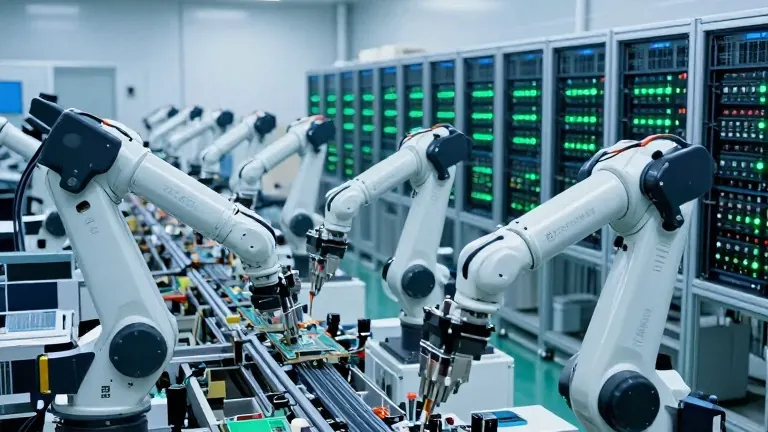
NBS Chief Statistician Yu Weining attributed the earnings growth primarily to surging profits in electronics and advanced technology sectors. Profits for electronic special materials manufacturers more than tripled over the nine-month period. Semiconductor device equipment makers saw profits jump 51.7% as demand for AI computing power and storage remained strong.
The buildout of AI data centers has also transformed other sectors. Optical fiber manufacturers reported profits that increased more than sixfold compared to the same period last year. Cable makers saw their profits more than double. Raw material producers for copper and aluminum also benefited from rising demand from AI and renewable industries, with profits rising nearly 45% over the nine months.
Shena Yue, a senior economist at Oxford Economics, noted that high-tech manufacturing investment and electronics capacity utilization remain resilient. She stated that the global AI cycle and domestic policy priorities support these sectors. However, she warned that overall investment and industrial utilization across the broader economy remain subdued.
Household demand remains the weak link in the economic recovery. The property downturn continues to weigh on housing purchases and related durable goods. Retail sales grew 1.1% in September, a figure that beat forecasts but remained only marginally above the weak reading from August. The Chinese economy expanded 4.5% in the third quarter, bringing growth for the first nine months to 4.6%, which falls within the government’s full-year target range of 4.5% to 5%.
Beijing has held back from major new stimulus for domestic demand so far. Concerns over local government debt and the fading benefits of consumer trade-in subsidies have complicated policy decisions. Dan Wang, China director at Eurasia Group, said policymakers see no urgency to act. She noted that falling prices have raised purchasing power, and officials are betting on tech exports to meet growth targets.
Strains are mounting among businesses and consumers despite the headline growth figures. Wang described most manufacturers as making very thin profits, with some operating at a loss. Consumers continue to save rather than spend, coinciding with China’s most severe employment crisis in decades. Local governments, burdened by debt, are wary of spending as Beijing works to rein in local debt and excess capacity.
Pessimism regarding the breadth of business profitability has affected financial markets. The benchmark CSI 300 Index entered a bear market late last week. The index fell as a prolonged consumption slump and intense competition took a toll on earnings across various sectors.
Source: CNBC
More Business · Scam Watch · Report a business · Got a Story?