1905: Joan Newton Cuneo Races in Yonkers; 1917: Suffrage Amendment Carries by 2,305
Historian Mary Hoar details local milestones ranging from a female racing driver's exhibition to the narrow victory of the Equal Suffrage Amendment.
By Javier Cabrera ·
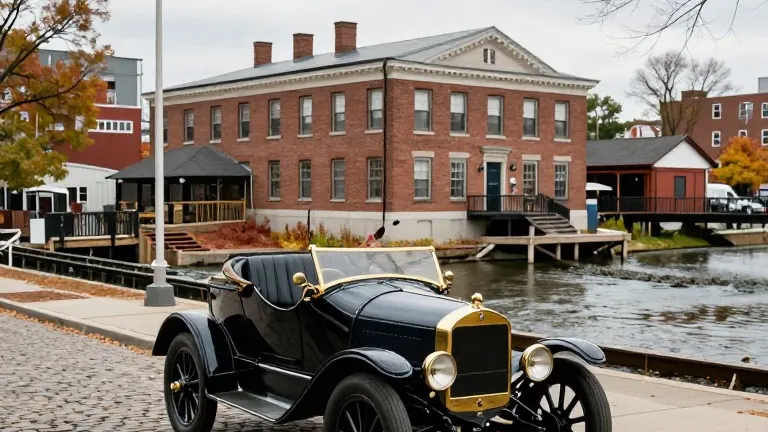
Yonkers Municipal Historian Mary Hoar notes that on November 6, 1905, Joan Newton Cuneo performed a two-mile driving exhibition in the city. Cuneo was considered one of the foremost women drivers in the country at the time. Her appearance in Yonkers occurred roughly twelve years before the local electorate approved the Equal Suffrage Amendment to the Constitution.
The amendment passed Yonkers voters on November 6, 1917, with a majority of 2,305 votes. This local result aligned with the national push for women's voting rights, which had been a subject of debate in the city for decades. Hoar, who holds the 1977 Key to the City of Yonkers and serves as President Emeritus of the Yonkers Historical Society, highlights these dates as part of a historical column for the Yonkers Times.
The column also revisits a 1944 dispute between City Manager William Walsh and Police Chief William Kruppenbacher. On November 2, 1944, Walsh formally charged Kruppenbacher with delinquencies affecting his fitness for duty. Walsh, acting as Public Safety Commissioner, also charged Lieutenant O'Connor and Patrolmen Boyle, Connolly, and Posenski. The trial was scheduled for November 14, with Deputy Public Safety Commissioner W. Chantler Arbuckle presiding.
Walsh alleged the officers failed to investigate a building on Copcutt Lane and Nepperhan Avenue that was used for a suspicious purpose. Kruppenbacher allegedly pulled officers from the case without completing an investigation. Walsh described Kruppenbacher as negligent and derelict in his official duties. The incident highlights a specific friction point in mid-20th century city management and police oversight.
Earlier environmental efforts are also detailed. In 1930, DPW Commissioner William Colquhoun announced a plan to clean the Nepperhan River bed and the Main Street sewer outlet. The river was clogged with trash and threatened public health by blocking the flume under Larkin Plaza. Workers were tasked with deepening the channel to allow waste to flow into the Hudson River more quickly, preventing backups and overflows.
Other historical entries include a 1922 riot involving over 1,000 high school students after a football game against New Rochelle. Officers struggled to maintain order when a NYU student refused to leave the field. In 1904, Frank Crocker, son of Tammany Hall boss Richard Croker, broke an automobile racing record at Empire City Track. He completed twelve miles in 11 minutes and 32 seconds. Crocker died in a racing accident the following January at age 27.
The column concludes with a 1935 discovery in an Ellott Avenue backyard, where two girls unearthed a 1710 coin. The coin bore the image of a king with the words Georgius II Rx. Local speculation suggested it was dropped during the American Revolution. These events are part of a weekly series chronicling the city's past for residents and historians.
Source: Yonkers Times