Tennessee pauses executions after hour-long IV struggle leaves inmate alive
Legal filings detail the use of infant-sized needles and a lack of supervision during Christa Pike's failed lethal injection.
By Owen Turner ·
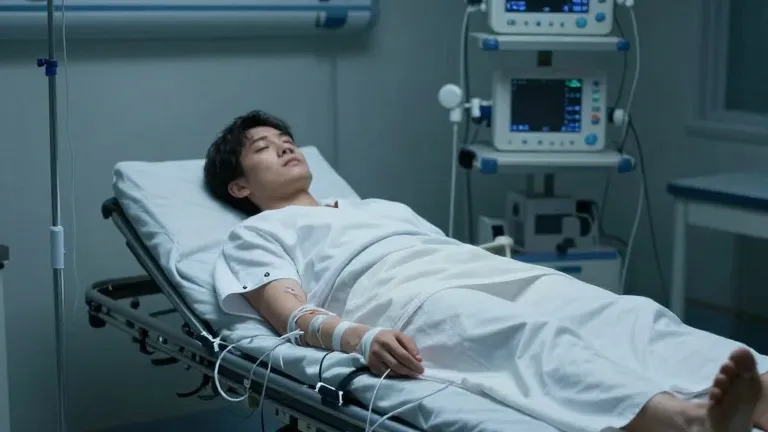
Christa Pike now talks and walks in her prison cell after surviving a lethal injection that state medical experts have called malpractice. She returned to her cell after ten days in a hospital, where she spent several days on a ventilator. Her condition has prompted Tennessee to suspend all executions while officials review the procedure.
Court filings released on Thursday outline the specific failures during the 30 September attempt. Pike's attorney, Randy Spivey, described a nearly hour long struggle by four unidentified team members to insert an IV line. The team used approximately ten needles, repeatedly puncturing Pike's arms without securing a stable connection. Spivey noted that the team frequently worried that her veins might have blown.
The procedure utilized a 24 gauge needle, a catheter size typically reserved for infants or small children. Joel Zivot, a professor of anesthesiology and surgery in Atlanta, testified that pushing the required 50cc syringe of pentobarbital through such a small catheter would almost certainly rupture the vein. At 7:07 pm, about half an hour into the attempt, a team member stated, "I think it is blown."
Pike reported physical pain during the process. The timeline records her grimacing and stating that her arm was "really burning." Jonathan Groner, an emeritus professor of clinical surgery at Ohio State University, pointed out that standard pentobarbital vials instruct medical staff to stop the infusion immediately if a patient complains of pain. The team continued despite these signals.
The execution team also relied on ultrasound to locate veins, a technique Groner said requires years of specialist training to master. He observed that the team did not know how to use the equipment. At 7:23 pm, saline was pushed through the line with difficulty, a sign Groner described as a flashing red light. One minute later, at 7:24 pm, the team declared the IV ready and began the injection.
Zivot identified several systemic failures, including a poorly written protocol and a lack of a clear leader in the room. He noted that the team used technology they may not have had permission to employ. Pike's lawyers had warned the state multiple times before the execution that her veins were exceptionally small and compromised.
Pike was sentenced to death for the 1995 murder of classmate Colleen Slemmer. She was 18 at the time of the crime. The failed attempt has sparked a wider review of lethal injection practices across the United States.
Groner described the event as a medical charade. He stated, "The ultimate penalty in our country, whether one agrees with it or not, is death. It is not torture, then death." Zivot added that the team pressed forward when safety protocols dictated they should have stopped, noting that medicine relies on accountability and training that were absent in the death chamber.
Source: The Guardian