Halloween's Scottish Roots: A Commercial Takeover
Americans are projected to spend $13.5 billion on the holiday this year, a figure that dwarfs British spending despite the celebration's Celtic origins.
By Javier Cabrera ·
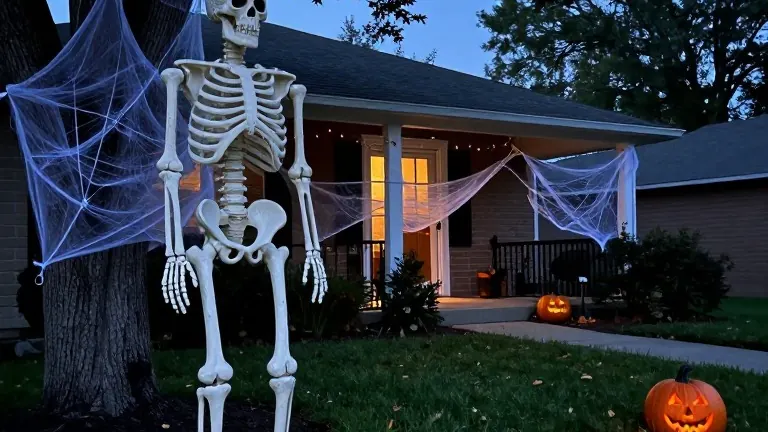
Halloween is now a massive American retail event, but its roots lie in Scotland and ancient Celtic rituals.
U.S. consumers are expected to spend $13.5 billion on the holiday this year, according to the National Retail Federation. In Britain, spending is projected at $940 million. This gap means Americans are spending roughly three times as much per person as their British counterparts.
Koen Pauwels, a Distinguished Professor of Marketing at Northeastern University, attributes the disparity to marketing infrastructure and social meaning. He notes that Halloween carries no religious obligations, mandatory family dinners, or required gifts. "It’s pure participation and self-expression, and Americans have extended it to adults, pets and home décor," he said.
The holiday traces back more than 2,000 years to Samhain, a festival observed by the Celts in Scotland, Ireland, Wales, and northern France. Celebrated between October 31 and November 1, the event marked the end of the harvest and the start of the darker half of the year. The Ulster Folk Museum in Northern Ireland explains that people believed the boundary between the living and the dead was thinnest during this time. To manage the spirits, communities lit large bonfires.
Victoria Millar, curator at the Ulster Folk Museum, stated that archives contain chilling stories shared to warn or protect households. "Masks were worn, fires were lit and stories of ghosts, fairies, and even the devil were shared," she said.
Celtic traditions included wearing costumes to hide from evil spirits. Trick-or-treating also has Celtic origins, with people dressing as spirits to beg for food. Francis Blessington, a professor of 17th-century English literature at Northeastern University, noted that people would do anything to appease the dead or rid themselves of evil spirits.
The tradition of dressing as witches emerged later, following the 17th-century witchcraft craze in Europe. Thousands of women were accused and burnt at the stake during this period. The practice of carving pumpkins into jack-o-lanterns arrived in North America in the 19th century via Irish and Scottish immigrants. The custom originated from the myth of Stingy Jack, who roamed the world with a candle in a hollowed-out turnip. In America, settlers switched to the more plentiful native pumpkin.
Roman influence also shaped the holiday. As the Roman Empire expanded into Celtic territories around the 1st century AD, Samhain incorporated Roman festivals like Feralia. Later, Christian traditions merged with these practices. The holiday aligned with Allhallowtide, a three-day observance spanning October 31 to November 2. This period includes All Hallows' Eve, All Hallows' Day, and All Souls' Day.
In Britain, the 16th-century Reformation pushed All Hallows' customs to the margins. Bonfire Night, commemorating the 1605 attempt to blow up Parliament, became the predominant autumn fire festival. However, Halloween returned to the U.K. as an American import through 1980s films and television. Shows and movies depicted the holiday in ways that consumed popular culture, from horror franchises to family comedies.
Pauwels observed that Halloween now garners more commercial attention in the U.K. than Guy Fawkes Night, especially among younger consumers. This has driven a steep increase in British spending. He noted, however, that Britons have not fully embraced the American habit of competing with neighbors over decorations. "One-upping the neighbors with a 12-foot skeleton on the lawn" remains "much more American than British."
Source: Northeastern Global News