Government Estimates 400,000 Marchers in France
Interior Ministry data shows 135 arrests and 70,000 officers deployed as crowds protest school conditions and policing tactics.
By Owen Turner ·
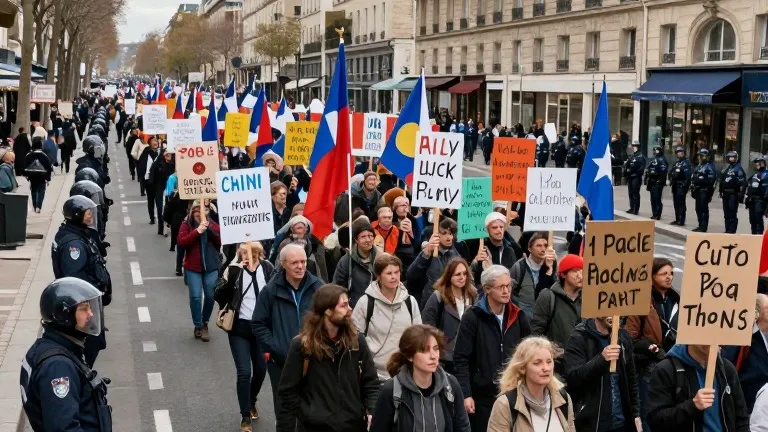
The French government calculated that at least 400,000 people marched across the country on Saturday, October 24, in a coordinated display of support for student demands regarding school infrastructure and staffing.
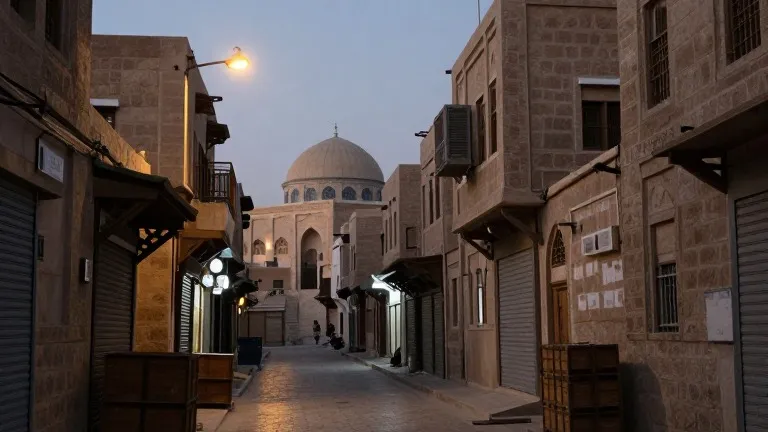
The Interior Ministry reported that 70,000 police officers were deployed nationwide to manage the events. This large security presence required many museums to close and led shop owners to board up their windows in anticipation of crowds. The scale of the mobilization reflected official fears that the day would repeat the violence of the previous weekend.
The government counted at least 135 arrests across the nation. Authorities confiscated a variety of items from demonstrators, including metal balls, lead pellets, fireworks, slingshots, steel balls, improvised weapons, a katana sword, and airsoft guns. Minister of the Interior Laurent Nunez confirmed these figures in an official release.
In Paris, local authorities estimated that at least 110,000 people marched along the eastern edge of the city. The mood remained relaxed for most of the afternoon, with brass bands playing and families walking together. Participants carried banners with messages such as "Oppression breeds rebellion" and "The right to protest." Tensions increased near the end of the route at Porte de Vincennes, where masked individuals threw glass bottles and stones at officers. Police responded with teargas, water cannon, and stun grenades. Similar clashes occurred in Lyon, Lille, Montpellier, Nantes, Toulouse, and Marseille, where teargas and bin fires were reported.
The movement began in mid-September when students between the ages of 15 and 18 started protesting staff shortages, leaking roofs, crumbling buildings, and a lack of chairs in crowded classrooms. The initial student action has expanded into a wider movement involving trade unions, teachers, and parents. Police investigations are currently underway into incidents where children and protesters were injured by explosive police weaponry.
President Emmanuel Macron faces growing pressure as his term nears its end. Critics point to his administration's ban on demonstrations not organized by unions and its strategy of keeping marchers out of city centers. Nadège, a 43-year-old communications worker who was teargassed at a previous peaceful demonstration, stated that people are now afraid to protest. She described the act of marching as requiring courage and defended the legal right to demonstrate in the street.
Jérôme Rodrigues, a prominent figure from the 2018 and 2019 gilets jaunes movement, said the government is afraid and is pushing demonstrators to the edges of cities. He argued that police shields do not solve the financial struggles of the French people. He indicated that demonstrations are likely to continue every weekend. In Orléans, thousands of protesters shouted slogans against both Macron and Marine Le Pen, the leader of the National Rally party who is a frontrunner in next year's presidential election.
Source: The Guardian