EU Auto Rules May Cut Turkey and Japan From Subsidies
A new German-French compromise on the Industrial Accelerator Act would grant origin status to some non-EU suppliers while excluding major exporters like Turkey and Japan from financial support.
By Owen Turner ·
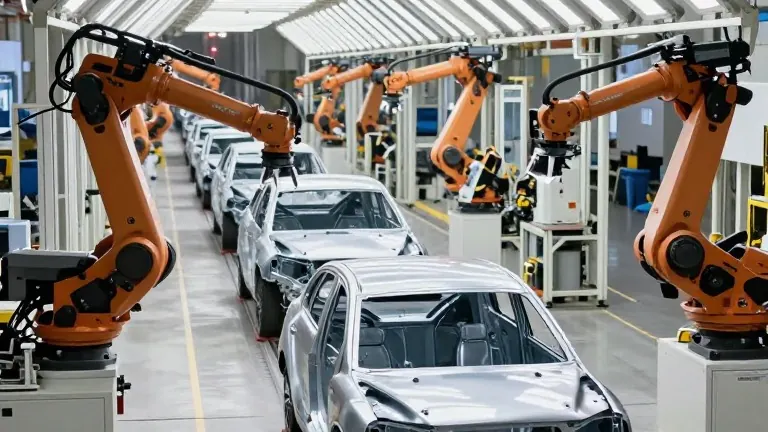
Germany and France reached a compromise earlier this month to resolve a long-standing deadlock over the European Union's Industrial Accelerator Act. The agreement defines which vehicle parts qualify as European origin. It excludes major auto suppliers such as Turkey and Japan from receiving EU subsidies.
The IAA was proposed in March to protect the European auto sector from Chinese trade practices. The law would upgrade factories and limit subsidies to vehicles made in Europe. The German-French deal allows suppliers from the United Kingdom and Norway to qualify for European status. Other major players remain outside the scope.
Ayhan Zeytinoglu, chairman of the Economic Development Foundation, warned the framework could devastate Turkey's auto sector. He noted that 73% of Turkey's automotive exports go to the EU. The Turkey Automotive Exporters Association reported that exports to the EU reached 30.1 billion dollars last year. Zeytinoglu argued that excluding Turkey would hurt European competitiveness rather than help it.
The rules require 70% of a vehicle's component value, excluding the battery, to be made in Europe. The initial proposal covers battery-electric vehicles, plug-in hybrids, and fuel-cell models. These categories accounted for 27% of new EU car registrations last year. Tommaso Pardi of GERPISA and the French National Center for Scientific Research called the threshold generous. He noted that an average European electric car already has 83% of its parts from Europe without the battery.
The revised plan extends rules to self-charging hybrids and petrol or diesel vehicles sold after 2035. Most of Turkey's nearly 800,000 vehicle exports to the EU last year would fall into this broader category. Chinese automakers are expanding in Turkey, though some projects face setbacks. SWM Motors closed its Eskisehir factory within a year due to safety standard failures. BYD's 1 billion dollar plant in Manisa is currently on hold.
Morocco has received more than 10 billion euros in Chinese investment since the pandemic. For France, Morocco acts as a low-cost production hub. Excluding it would likely increase the price of budget French models. Japanese cars imported to the EU would not receive subsidies. Models built in Europe would qualify only if they meet European parts thresholds. Hyundai and Kia build cars in the Czech Republic and Slovakia but also ship models from Asia that would not qualify. Korean battery plants in Poland and Hungary would count as European.
European carmakers are lobbying to weaken the IAA to maintain access to foreign parts, particularly from China. They warn that higher parts costs would leave them behind Chinese rivals. Ankara is seeking a compromise to join the system later. This might include European firms based in Turkey while excluding recent Chinese-funded investments. European parts suppliers support a stronger IAA. They warn that up to 650,000 auto jobs in the region could be lost by 2035 without better protection. Benjamin Krieger of CLEPA suggested an opt-in mechanism based on objective criteria such as regulatory alignment and the rule of law. He stated that partners meeting these standards are welcome.
The proposals still face legislative hurdles in Brussels before they can become law. The next steps involve negotiations in the European Parliament and Council to finalize the text.
Source: Deutsche Welle
More Business · World news · Scam Watch · Report a business · Got a Story?