520 Kilometers: Target Altitude for Three New Signal Spies
Rocket Lab’s Electron rocket placed three HawkEye 360 satellites into low Earth orbit on October 23, expanding a fleet now nearing fifty spacecraft.
By Owen Turner ·
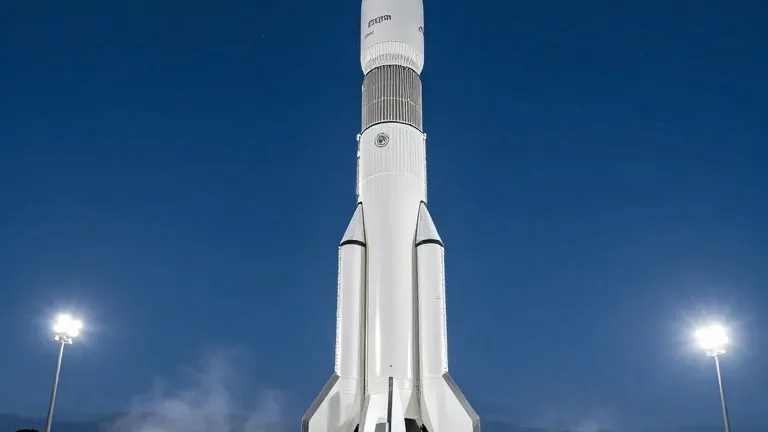
The Electron rocket cleared the pad at 8:11 p.m. local time on Thursday, October 23, from Rocket Lab’s New Zealand facility. The vehicle carried three commercial satellites designed to monitor radio frequency emissions from space.
These spacecraft, built for Virginia-based HawkEye 360, will settle into a low Earth orbit at an altitude of 520 kilometers. Once commissioned, the trio will scan the planet for signals across the RF spectrum. The mission, dubbed "We're Not Hawking Around," marks Rocket Lab’s 98th launch and its 19th flight of the year.
HawkEye 360 describes its role as collecting data for maritime tracking, GNSS jamming detection, and radar monitoring. The company supplies this intelligence to the U.S. government and allied nations. "Our space-based collection, proprietary signal processing and AI-powered analytics transform knowledge of the RF spectrum into a strategic advantage," the firm stated.
This deployment follows a rapid pace for the company. Just two days prior, SpaceX flew three additional Hawk satellites on the Bandwagon-5 rideshare mission. Since entering orbit in 2018, HawkEye 360 has launched nearly 50 satellites. The company says its goal is to enable faster decision-making through real-time signal analysis.
The Electron rocket itself is a two-stage vehicle standing 59 feet tall. Rocket Lab has used this specific configuration for 16 flights this year. The remaining three launches in 2026 utilized HASTE, a suborbital variant that tests technologies in hypersonic environments.
The three new satellites will join a network operating in clusters. Their primary function is to map communications and support space defense initiatives. The launch concluded the company's planned mission sequence for the day.
Source: Space.com