2,400 New Homes: The Scale of Hawaii's Housing Shift
A 15-acre redevelopment in Honolulu will replace aging public housing with a mixed-income community, aiming to provide stable living for working families over the next 15 years.
By Amelia Clarke ·
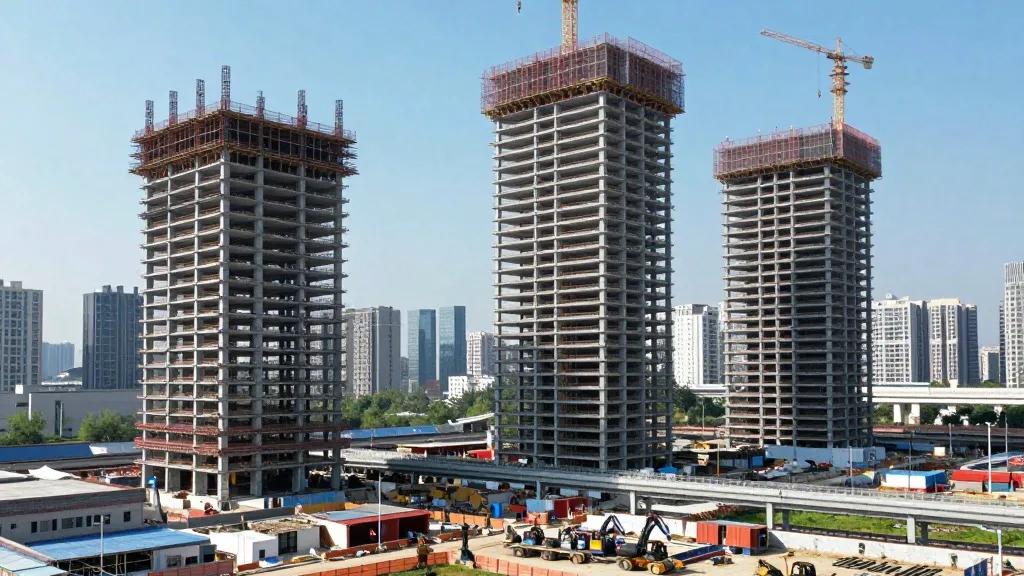
For working families in the Kalihi-Palama neighborhood, the landscape of affordable housing in Honolulu is set to change dramatically. This week, state officials marked the start of construction for the first phase of the Mayor Wright Homes redevelopment. This project represents the largest public housing initiative in the state's history, signaling a shift from small-scale repairs to a comprehensive overhaul of how the state provides stable housing for its residents.
The new development will offer more than 2,400 rental homes, a significant increase from the current complex. These units will range from studios to five-bedroom apartments, accommodating diverse household structures. The plan includes public housing, condominiums for sale, and commercial spaces, all distributed across ten towers. This expansion addresses the immediate need for density while creating a self-sustaining community with local amenities.
Affordability remains the central pillar of the project, ensuring that the benefits reach those who need them most. More than half of the units are reserved for tenants earning less than 80% of the area median income. Later phases will extend eligibility to households earning up to 100% of the area median income, a threshold estimated at roughly $150,000 per year for a family of four. This mixed-income approach aims to prevent the concentration of poverty, a factor often linked to lower educational outcomes and health disparities in single-income housing projects.
The site, bounded by King Street, Liliha Street, and Vineyard Boulevard, will also feature four acres of public parks and recreational space. This green space is designed to be within walking distance of the planned Iwilei rail station. By integrating housing with transit and leisure, the development seeks to improve daily life for residents by reducing commute times and providing accessible areas for physical activity and community gathering.
Contextually, this project replaces a complex that has served the community for nearly 75 years. The state's 2017 estimate for the entire redevelopment was $1.3 billion, with the current Phase 1A costing $333 million. The long timeline, expected to take 15 years to complete, reflects the scale of the undertaking. The first building is scheduled to open in 2029, providing a concrete milestone for displaced residents who are being relocated and given priority to return.
Governor Josh Green described the initiative as central to the state's broader housing strategy, emphasizing that stable housing is a foundation for health and economic stability. He noted that when people have secure homes, they are better positioned to focus on education and food security. Similarly, Honolulu Mayor Rick Blangiardi viewed the project as a historic pairing with the arrival of the Skyline rail line, calling the combination unprecedented for affordable housing in the region.
Hakim Ouansafi, executive director of the Hawai‘i Public Housing Authority, stressed that the groundbreaking is about breaking barriers rather than just starting construction. He argued that the state cannot solve future housing problems using past methods, insisting that public housing should not be considered second class. Moe Mohanna, president of Highridge Costa Development Company, called the project a legacy, praising the state for taking on an initiative of this magnitude. Together, these leaders frame the work as a necessary evolution for a state facing persistent housing challenges.
The project is expected to reshape the demographic and physical fabric of downtown Honolulu for decades to come. By combining high-density living with mixed incomes and transit access, the Mayor Wright Homes redevelopment aims to create a model for how the state can house its growing population. As construction begins, the focus shifts from planning to execution, with the first units slated for occupancy in 2029.
Source: Hawaii News Now
More News · Honolulu news · Report a business · Got a Story?