Tesla Commences High Volume Optimus Production at Fremont Plant
The automaker has shifted space from legacy vehicle lines to build one million robots annually, establishing a self-learning training ground to solve data scarcity issues.
By Javier Cabrera ·
Tesla has moved its humanoid robot project from the prototype phase into high volume manufacturing, creating immediate tension between the company's ambitious output targets and the complex engineering challenges that remain. The automaker has begun producing Optimus units on a dedicated line within its Fremont facility, marking a significant shift in operational focus from traditional passenger vehicles to autonomous robotic labor. This transition represents a major capital reallocation and a bet on the commercial viability of physical AI in the near term.
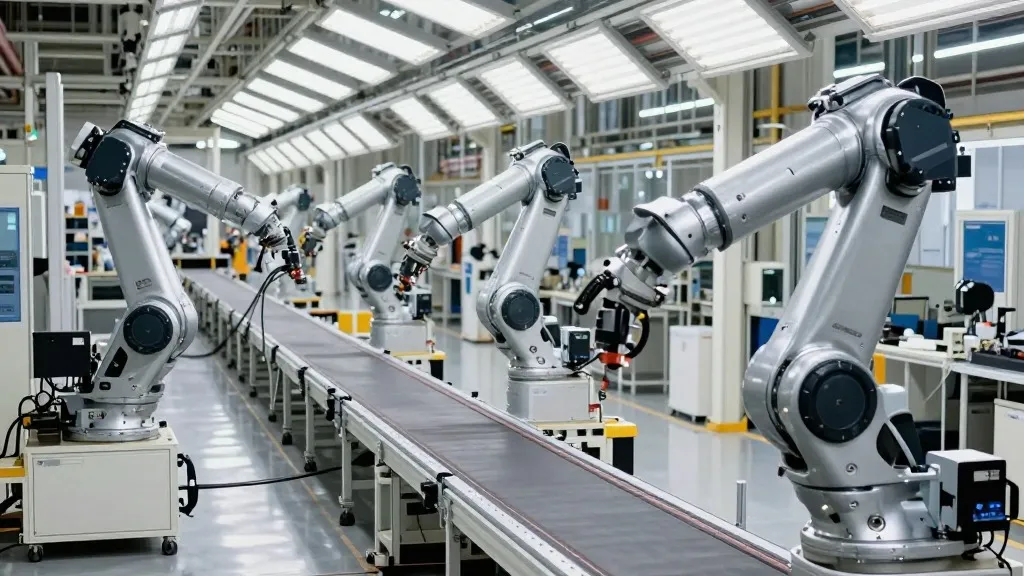
The first key point involves the physical conversion of the Fremont factory. The production line now occupies space that previously assembled the Model S and Model X. Tesla cleared that old vehicle assembly equipment in just 46 days this spring to make room for robot manufacturing. The new setup is designed to support an annual capacity of one million units, a scale that requires massive logistical and engineering coordination to maintain efficiency.
Second, the company has confirmed that the current manufacturing process yields units that meet commercial product standards. In its third quarter shareholder letter, Tesla stated that the bots coming off this line are the first production quality models it has manufactured. This distinction is critical for investors as it signals that the robot is no longer just a laboratory curiosity but a tangible industrial asset ready for the market.
Third, the rollout follows a predictable growth pattern. CEO Elon Musk described the production ramp as a classic S curve, noting that the initial phase will have a shallow slope. He expects the team to finish refining the robot's AI, electromechanical design, reliability, and service life by the end of next year. Once that engineering phase is complete, Tesla plans to begin delivering Optimus units to external companies for dangerous, repetitive, and around the clock jobs.
A major challenge for Tesla is the lack of a large fleet to generate training data, unlike its car business which relies on millions of vehicles sending back real world driving information. To solve this, the company is launching the Optimus Academy. This program will use 10,000 to 20,000 robots to practice a wide range of tasks. Every unit produced in Fremont will contribute data to this system, allowing the robots to teach themselves and improve the next version of the model.
Hardware upgrades are also on the roadmap to support this learning process. Tesla intends to integrate its AI5 chip into Optimus units next year. Musk indicated that a new video demonstrating tasks driven by AI rather than preprogrammed motions should be released within one or two months. He emphasized that this approach is superior to rival demos that rely on scripted routines, which he argued would not hold up in real world conditions.
The supply chain is scaling in tandem with production. In September, Tesla certified Tuopu, Joyson, and Sanhua as mass production partners for key components. Additionally, a much larger Optimus factory is under construction at Giga Texas. Recent drone footage shows the steel frame nearing completion, and Musk has set a long term target for that plant to produce 10 million robots per year.
From a financial perspective, production costs are trending toward the expected manufacturing cost of the Cybercab. This alignment suggests the robot is being engineered for volume from the start. However, the design of the hands remains the toughest piece of the system. Current engineering efforts are heavily focused on solving this issue, which is critical for the robot's ability to perform precise tasks in the wild.
Source: Teslarati · original report published
More Business · Scam Watch · Report a business · Got a Story?