Iran and U.S. Continue Diplomatic Outreach After Delegation Leaves Qatar
Tehran proposes opening the Strait of Hormuz within two days if Washington meets specific conditions, while regional leaders urge a return to dialogue.
By Owen Turner ·
Two Iranian officials confirmed that their diplomatic team has departed Qatar following days of negotiations. The officials stated that communications between Tehran and Washington will continue through the Qatari mediator. They spoke on condition of anonymity due to the sensitive nature of the ongoing discussions.
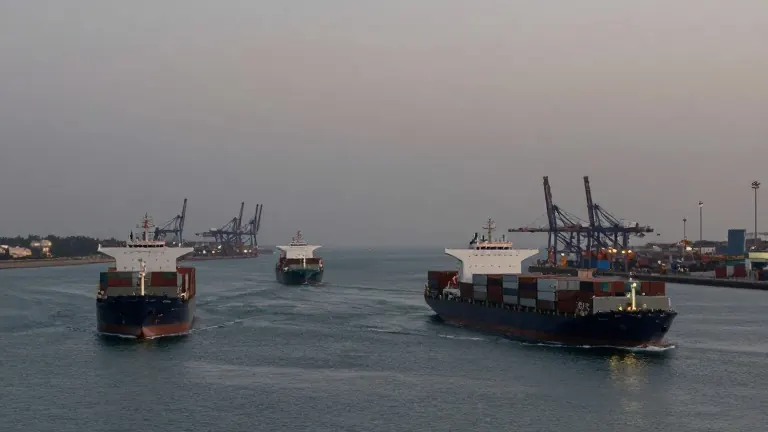
The primary goal of these efforts is to prevent a resumption of full-scale hostilities in the region. Tehran has issued an offer to fully open the Strait of Hormuz to commercial shipping within two days. This proposal is contingent upon the United States meeting several unspecified conditions. Iranian Foreign Minister Abbas Araghchi noted on a visit to Turkmenistan that the final outcome hinges on Washington's response to specific questions from Iran.
U.S. President Donald Trump said on Sunday that he held a productive telephone conversation with Israeli Prime Minister Benjamin Netanyahu on Saturday. Trump described the call as very good and stated that the two leaders discussed Iran, though he provided no specific details. Netanyahu has remained largely silent on the call since the election last week in which his alliance lost its parliamentary majority.
Analysts suggest the diplomatic standoff is heavily influenced by domestic political pressures in Israel. Andreas Krieg, a professor at King’s College London, argued that the situation is effectively a contest between Qatar and Israel. He noted on social media that Qatar is working to create a diplomatic exit while Israel seeks military solutions. Krieg described Israel’s approach as an attempt to place the region under strain.
Iran’s new supreme leader, Ayatollah Mojtaba Khamenei, has intensified public messaging about the country's readiness for both diplomacy and combat. He met with military leaders and instructed them to respond immediately to any threat from the U.S. or Israel without geographic limits. Khamenei has not appeared in public since the strikes that killed his father on February 28.
Mohsen Rezaei, Iran’s security chief, warned that any attack would result in devastating blows using new weapons. In an interview with state television, he described a change in tone from the United States as a positive sign. Rezaei acknowledged receiving a letter from U.S. Vice President JD Vance but said he had not yet responded. He also clarified that Iran has not decided to change its nuclear doctrine, although some citizens have questioned if a new attack would warrant such a shift.
Regional leaders expressed concern at the Manama Dialogue security summit in Bahrain. Anwar Gargash, an adviser to the UAE president, stated that the stances of the U.S. and Iran remain far apart. He warned that if these positions are not bridged, the region must prepare for the worst. Egypt’s Foreign Minister Badr Abdelatty predicted that a second round of escalation would be more destructive.
The Strait of Hormuz saw a rise in attacks on commercial ships in October, marking the busiest month for assaults since the war began in March. Gulf nations have invested billions of dollars in defense upgrades since the conflict started. The United Arab Emirates has faced the most attacks, with more than 3,000 drones and ballistic missiles targeting its facilities, according to the International Institute for Strategic Studies.
China announced it will send a special envoy to Iran, Oman, and Saudi Arabia in early to mid-November. President Xi Jinping met with Oman’s sultan and emphasized that the Gulf should not become an arena for great-power rivalry. The two nations called for a return to dialogue to stabilize the region.
The next phase of this diplomatic effort depends on the U.S. response to the Iranian proposal regarding the strait. China’s envoy is scheduled to arrive in the region in early November to facilitate further talks.
Source: Greenwich Time