CA drivers face three legal records post-crash
Missed filings can suspend licenses, and police reports do not cover the DMV requirement.
By Javier Cabrera ·
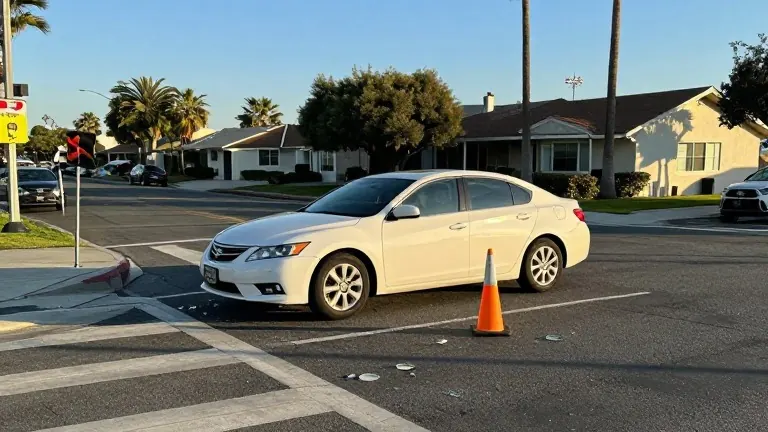
California drivers must create three distinct legal records in the hours following a car accident. Each record goes to a different agency and has its own deadline. Most drivers treat the immediate aftermath as a single event and often miss one requirement.
The first obligation occurs at the scene. Drivers must stop and exchange driver’s licenses, vehicle registrations, insurance information, and current addresses. If a collision involves property damage and the owner is not present, the driver must leave a note with contact details attached securely. The driver must also report the incident to law enforcement.
The second record is the Report of Traffic Accident Occurring in California, known as the SR-1. This form goes to the Department of Motor Vehicles, not the police. Every driver involved must file it within 10 days if property damage exceeds $1,000 or if anyone is injured or killed. A police report or insurance claim does not satisfy this requirement. Failure to file can lead to a suspended driving privilege, a penalty that arrives long after the crash.
A separate rule requires reporting any collision involving injury or death to law enforcement within 24 hours. These are two different deadlines with two different recipients. Drivers on private property, such as parking lots, still owe the SR-1 filing regardless of who caused the collision.
The third record involves the insurance claim and fault determination. California is a fault state, meaning recovery depends on who was responsible. The system uses comparative fault, where responsibility is divided by percentage. A driver found partly at fault can still recover damages, reduced by their share of the blame. Casual remarks at the scene, such as an apology, can later be read as an admission of fault that affects the percentage and the payout.
Conditions at the scene vanish quickly. Skid marks, signal timing, and debris positions do not survive the afternoon. Nearby businesses often overwrite security camera footage within days. Drivers should identify which cameras face the intersection and request the footage in writing immediately. Prompt medical evaluation also helps link injuries to the specific crash, avoiding arguments that the injury came from elsewhere.
Experienced guidance for crash survivors in Rosemead often focuses on reconstructing these three items. The practical discipline is to finish the first hour with a short list: documents photographed, police notified if anyone was hurt, and the SR-1 calendared for the DMV. Items that were never created cannot be recovered later.
Source: Yonkers Times