Serbia's Leaderless Student List Preps for Government
The movement won 53% of the vote on Sunday, forcing Aleksandar Vučić to concede after 14 years in power.
By Owen Turner ·
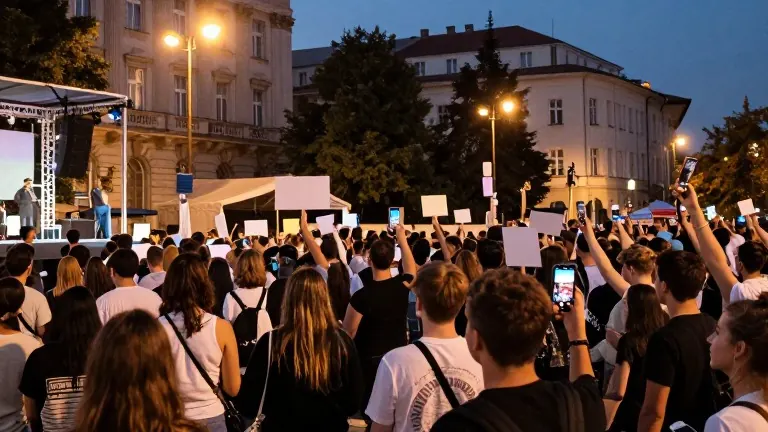
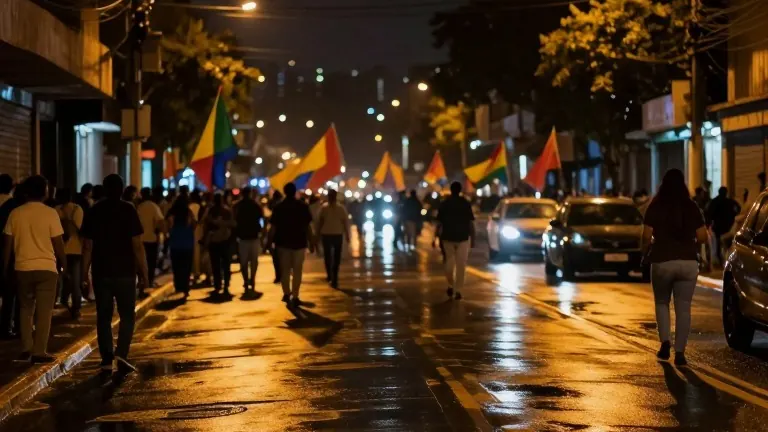
Aleksandar Vučić conceded defeat late on Sunday, ending his 14-year hold on Serbian politics. The former strongman president lost a landslide election to the Student List, a movement with no prior experience in government. Supporters took to the streets in Belgrade on Monday to celebrate the historic shift. The Centre for Free Elections and Democracy reported that the Student List secured 53% of the vote, translating to 141 seats in the 250-seat parliament. Vučić's Serbian Progressive party captured 39%, earning 103 seats.
The Student List operates without a formal hierarchy, a structure that has raised questions about how it will govern. Its candidate pool included students, academics, actors, and farmers. Key figures include cardiologist Ilija Srdanović, who headed the list, and Radomir Saičić, a Belgrade University chemistry professor who spoke for the group after the win. Dejan Šoškić, a former central bank governor, also ranks among prominent members. The movement faces the challenge of replacing a bureaucracy staffed by civil servants loyal to the outgoing regime, a similar obstacle faced by Péter Magyar’s party in Hungary.
Ana Mirković, a university educationist and Student List candidate, stated that the group views its victory as a historic debt to the people rather than a gain in privilege. She described the first priority as the social and psychological detoxification of the country. The platform promises to fight corruption and restore the rule of law by creating an independent police unit accountable to prosecutors. It also aims to purge police officers linked to organized crime and ban party loyalists from state-owned companies.
Mirković said the new government would dismantle a system of intimidation by urgently opening up the media and stopping institutional violence. She added that the goal is to rebuild society from the ground up through full disclosure of financial flows and depoliticizing the judiciary. The Kremlin expressed hope on Monday that the new leaders understand the benefits of cooperation with Russia. Vučić, who maintained close ties with Moscow, blamed his defeat on European support and the US deep state.
International leaders sent messages of welcome. Ukrainian President Volodymyr Zelenskyy called the result a new chapter for the country. German Chancellor Friedrich Merz stated that Berlin would actively support Serbia’s European path. Analyst Dušan Vučićević noted that the movement insisted on addressing domestic political issues first. He told Agence France-Presse that it remains unclear if this grassroots model can work elsewhere, though it secured more than 50% of the vote.
Nikola Burazer, a program director at the Centre for Contemporary Politics in Belgrade, said the movement’s decision-making process needs to speed up. He noted that candidate selection took months and that the public will soon focus on how the government will be structured. Serbia’s constitution requires the new parliament to convene within 30 days of the official result. A 90-day deadline follows for forming the government. The country must also hold presidential elections before December 27, as Vučić stepped down to run for prime minister.
Source: The Guardian