Algeria's Parliament Approves Troop Deployment to Niger
The vote marks a shift for a country that has kept its soldiers at home for decades, though troop numbers and dates remain undisclosed.
By Amelia Clarke ·
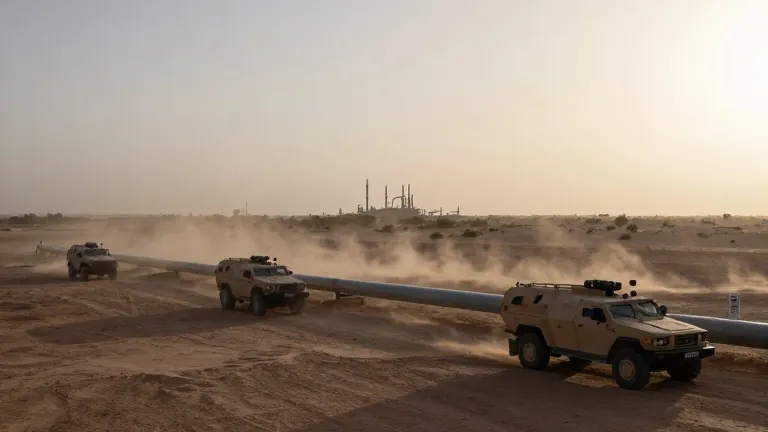
Algeria's lawmakers cleared the way on Sunday for soldiers to be sent into Niger, opening a new chapter in a foreign policy that has long avoided putting boots across the border. The People's National Assembly, the lower house, ratified the plan after the Council of the Nation, the upper house, approved it earlier the same day. Officials have not said how many troops would go or when they would arrive.
The vote follows a period of warming ties between Algiers and Niamey. Niger's President Abdourahamane Tchiani visited Algeria in February, and his defense minister, Salifou Mody, traveled to Algiers months later to discuss security cooperation. Nearly two months before the parliamentary vote, Algeria had already sent four Russian-made Sukhoi Su-30 jets, a transport aircraft and an aerial refuelling aircraft to Niamey after authorities said there had been an attempt to destabilize Niger's military-led government.
Senator Belkacem Boulghiti said the troops would work to protect Algeria's economic and strategic interests, particularly its oil facilities in Niger. After the vote, he told reporters the mission was to secure economic infrastructure. "It is simply an adaptation of our doctrine to evolving circumstances so we can rise to the new challenges imposed by the situation in the Sahel region," he said. Algeria's state-owned energy company, Sonatrach, operates in Niger, and the Trans-Saharan Gas Pipeline would carry Nigerian gas through both countries to Europe.
Algeria has spent more than $25bn on its armed forces in 2025, according to the Stockholm International Peace Research Institute, which makes it Africa's largest military spender. Under Article 91 of a 2020 constitutional revision, the president can authorize deployments abroad only with backing from at least two-thirds of the members of each chamber. Overseas deployments have been rare: Algerian forces joined the 1973 Arab-Israeli war, and nothing comparable has followed since.
The region around Algeria's southern border has changed sharply since 2011, when Muammar Gaddafi's government fell in Libya. Weapons and fighters, including Tuareg who had served in Libya, moved into neighboring states. A rebellion took hold in northern Mali in 2012, and armed groups later spread across Mali, Burkina Faso and Niger. Those three countries have recorded six military coups since 2012: three in Mali, two in Burkina Faso and one in Niger.
Western forces have pulled back across the Sahel. France withdrew troops from Mali in August 2022, Burkina Faso in February 2023 and Niger in December 2023. Niger demanded the departure of about 1,500 French soldiers after its July 2023 coup. About 100 Russian military personnel arrived in Niamey in April 2024 to train Nigerien forces. The United States pulled roughly 1,000 soldiers out of Niger in 2024 after the military government ended their security cooperation agreement, including personnel at a drone base near Agadez.
Algeria's relations with some neighbors have also been strained. The Algerian army shot down a Malian drone last April, and Niger, Mali and Burkina Faso recalled their ambassadors from Algiers afterward. Algeria had already drawn criticism from those governments for condemning the 2023 coup in Niger. In September, Algeria cut diplomatic relations with the United Arab Emirates, citing repeated "hostile" and "provocative actions" without detailing the incidents.
Algeria shares thousands of kilometers of border with Mali, Niger and Libya. Boulghiti said the troops would not be sent "to wage war in Niger" but to carry out a mission to secure economic infrastructure.
Source: Al Jazeera